Fire-rated plasterboard — also known as firebreak board, F board or DF board — is a type of gypsum board designed to offer fire resistance for a certain period of time. Its use is compulsory in certain construction elements according to the fire protection regulations (CTE-SI), and is especially relevant in Menorca for hospitality venues, hotels, tourist apartments and residential buildings.
This guide explains when it is compulsory, what types of board exist, how they are classified according to their fire resistance and how much they cost in Menorca.
What is Fire-Rated Plasterboard?
All plasterboards have a certain natural fire resistance because gypsum contains approximately 21% crystallised water in its composition. When fire strikes the board, that water evaporates absorbing energy, which slows down the spread of the fire. A standard 15 mm board can offer up to 30 minutes of fire resistance.
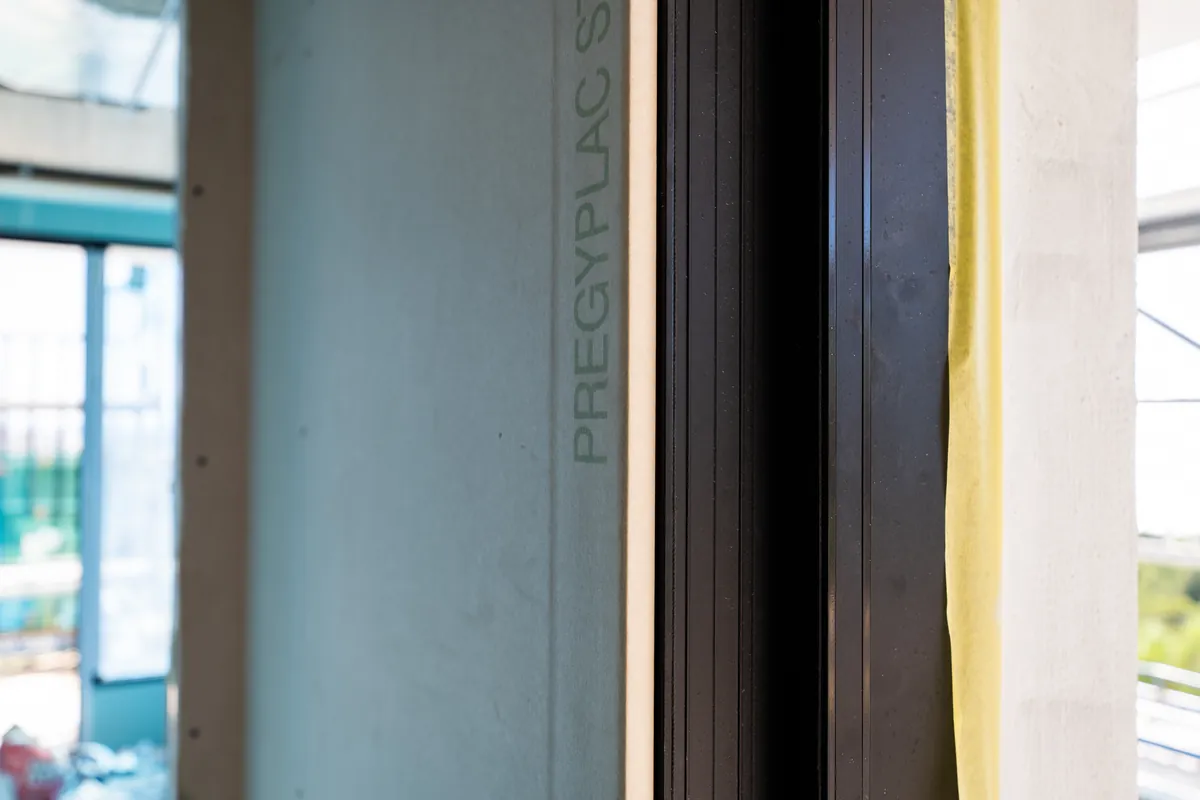
Fire-rated boards (F and DF) are reinforced with glass fibres that maintain the cohesion of the gypsum core at high temperatures, preventing the board from crumbling and losing its barrier function. The DF board (Densified with Fibre) combines greater gypsum density and glass fibre, and is the most effective. If, in addition to fire, you are concerned about noise, consult our guide on soundproofing prices for flats in Menorca and the CTE-HR regulations in the Balearic Islands.
Fire resistance classification
Fire resistance is measured in minutes and is expressed with the acronym EI (Integrity + Thermal Insulation):
The EI-30 classification (30 minutes of resistance) is reached with a standard 15 mm board. The EI-60 (60 minutes) requires a DF board of 15 mm on one side. EI-90 (90 minutes) is achieved with double DF board of 15 mm on one side, and EI-120 (120 minutes) with double DF board of 15 mm on both sides of the structure. For higher levels such as EI-180 or EI-240, special systems with triple board and additional materials are required.
CTE-SI Regulations: When It Is Compulsory
The Technical Building Code, in its Basic Document for Safety in case of Fire (CTE-DB-SI), establishes compartmentation requirements based on building uses.
Separation between dwelling and garage
The required requirement is EI-120 (120 minutes of fire resistance). This is the most common requirement in residential buildings in Menorca. The wall or ceiling separating a dwelling from the communal car park must reach 120 minutes of resistance. With plasterboard, this is achieved with double DF board of 15 mm on both sides of the metal structure.
Separation between dwelling and commercial premises
The requirement is EI-60 for low-risk premises or EI-90 for medium-risk premises. In Maó and in the tourist areas of Menorca, many buildings have commercial premises on the ground floor and dwellings above. The separation between both uses must meet the fire resistance corresponding to the risk level of the premises.
Installation shafts
The minimum requirement is EI-60. The shafts through which pipes, cables and ducts run must be compartmentalised with elements that offer at least 60 minutes of fire resistance, to prevent them from acting as chimneys in the event of a fire.
Public assembly venues
Restaurants, bars, hotels, dance halls and other public assembly venues have specific fire protection requirements that may include firebreak ceilings and partitions. The sectoral regulations of the Balearic Islands may be more restrictive than the state regulations in some aspects.
Applications in Menorca
Hotels and tourist apartments
The separation between hotel rooms and between tourist apartments must meet fire compartmentation requirements. In the renovation of these establishments, fire-rated plasterboard partitions are the most efficient solution to comply with the regulations without the complexity and weight of wet masonry solutions.
Buildings in the historic centre of Maó
The buildings of the old quarter of Maó, many of them converted into boutique hotels or tourist apartments, have special fire protection requirements that are often resolved with fire-rated plasterboard systems. The advantage of plasterboard over masonry is that it does not add significant weight to slabs that may be compromised.
Dwelling-garage separation in residential buildings
In communities of owners in Menorca, adapting the dwelling-garage separation to current regulations is a frequent renovation. Fire-rated plasterboard makes it possible to reach EI-120 without the need to demolish the existing separation: a double DF board wall lining is attached to the existing wall.
Boiler rooms and electrical panels
Gas boiler rooms and general electrical panels of buildings must be compartmentalised with firebreak elements. Fire-rated plasterboard walls are the usual solution for creating or reinforcing these rooms.
Types of Fire-Rated Board
The F board (glass fibre) of 15 mm offers EI-30 resistance, with a board cost of €8-€12/m² and an installed price of €38-€50/m². The DF board (densified with fibre) of 15 mm reaches EI-60, with a board cost of €12-€18/m² and an installed price of €48-€65/m². The double DF board (2x15 mm) achieves resistances of EI-90 to EI-120, with a board cost of €24-€36/m² and an installed price of €60-€85/m². The high-density DF board (18-25 mm) achieves EI-90 with a single board, at a cost of €18-€25/m² and an installed price of €55-€70/m².
Installed prices include metal structure, fixing, joint treatment and finish ready to paint. Prices for Menorca in 2026, VAT not included.
Installation: Particularities of Fire-Rated Plasterboard
The installation of fire-rated plasterboard follows the same process as standard plasterboard, with some important particularities:
The joints between boards must be treated with specific paste and tape to maintain the continuity of the firebreak barrier. Installation passages (cables, pipes) through the firebreak wall must be sealed with intumescent sealant or firebreak collars, as any unsealed gap cancels the resistance of the assembly.
The metal structure must be that specified in the fire resistance test of the system. Lighter profiles than those tested cannot be used, nor can the distances between studs be changed.
For installations in Menorca that require fire-rated plasterboard, the best guarantee is to work with a professional installer who knows the tested systems and can certify correct execution. Consult our page on plasterboard installation in Menorca for more information.
Real Case: Sectorisation of 3-Star Hotel in Cala Santandria
A 3-star hotel in Cala Santandria with 40 rooms distributed over 2 floors needed to adapt its fire compartmentation to renew its tourist activity licence. The technical inspection had detected that the separation walls between the room block and the common areas (reception, restaurant, service area) did not reach the fire resistance required by the CTE-SI.
Regulatory requirement: EI-120 sectorisation between the room sector and the common area sector, on both floors.
Solution executed:
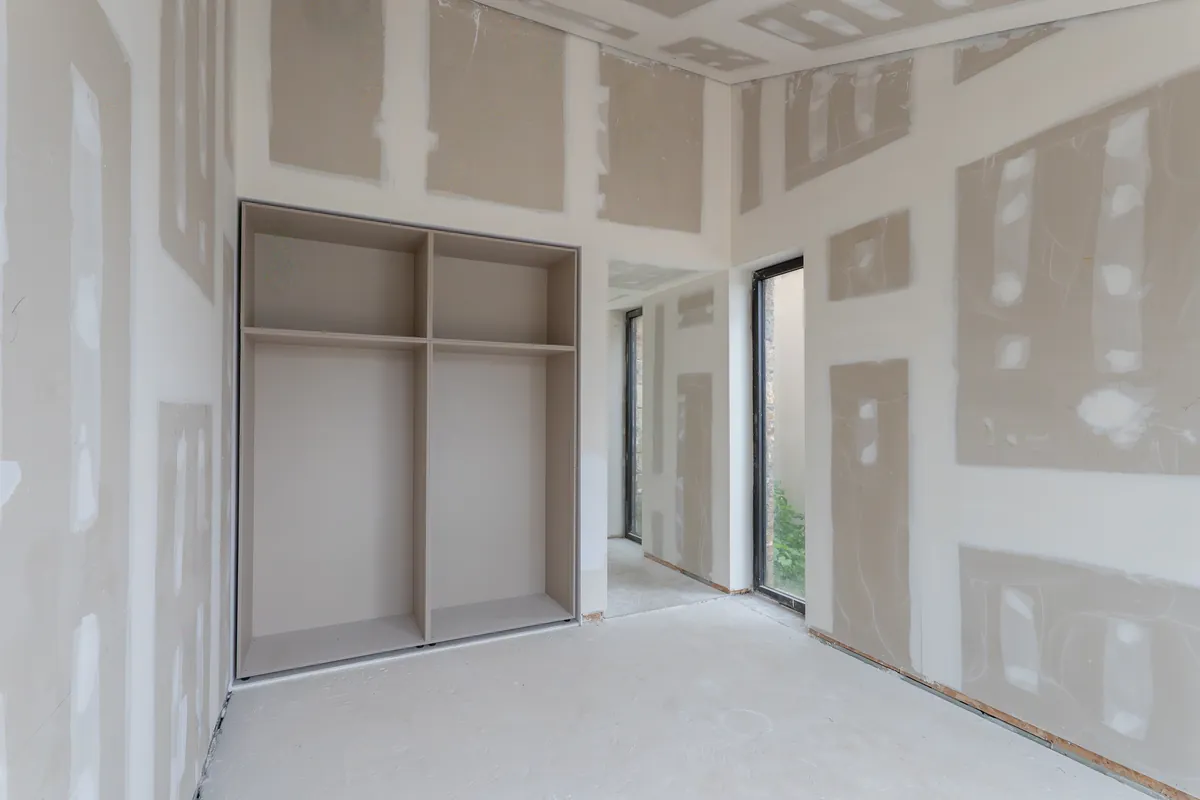
- Fire-rated plasterboard wall lining with double FOC (DF) board of 15 mm on both sides of the metal structure on all sectorisation walls (320 m² of wall in total between the 2 floors)
- Sealing of all installation passages (cables, HVAC pipes, plumbing pipes) with intumescent sealant and approved firebreak collars
- EI-60 fire doors at the 8 crossing points between sectors
- Joint treatment with specific paste and tape to maintain the continuity of the firebreak barrier
- Metal structure in accordance with the system test, with a distance between studs of 400 mm
Results:
- Duration of the work: 3 weeks (carried out between January and February, out of season)
- Total cost of the fire-rated plasterboard package: €28,000 (including intumescent sealing and coordination with the fire door installer)
The documentation delivered included a certificate of correct execution of the compartmentation system, technical data sheets for all materials used, fire resistance test certificates for the system and photographic report of the installation process. This documentation was submitted to the Consell de Menorca as part of the tourist activity licence renewal file, which was obtained without incident.
This project illustrates the importance of working with an installer who knows the tested systems of fire-rated plasterboard and who can certify correct execution. An error in the sealing of an installation passage or the use of a board not compliant with the test can invalidate the entire sectorisation. For projects in hotels in Menorca, technical documentation is as important as execution.
Next Step
If you need to install fire-rated plasterboard in your home, commercial premises or hotel in Menorca, visit our fire-rated plasterboard service page where you will find board types, detailed regulations, indicative prices and all the documentation we deliver. You can also request your free quote directly and we will send you a fixed quote within 24-48 hours.